JUAL

JUAL Think Tank | Solving the Temperature - change Puzzle! You'er CMC Film - covered Board, Ensuring 20 - year Durability
(JUAL Roofing Technology(苏州)有限公司,江苏苏州,215000)
摘 要:This paper focuses on solving the temperature variation challenge of JUAL CMC laminated panels. It points out that TPO/PVC and steel plates feature a large difference in coefficient of thermal expansion (CTE). Temperature changes easily induce and accumulate interfacial thermal stress, which further causes multiple failure risks such as interlayer debonding, structural deformation, corrosion and water seepage, as well as performance degradation under high and low temperatures.
关键词:CMC laminated panel; coefficient of thermal expansion; temperature-induced failure; interfacial thermal stress; surface activation process; low-modulus adhesive; metal roofing building material
As a new type of building material, CMC laminated panels play a vital role in extending the service life of metal roofs, providing long-term waterproof performance, and improving on-site construction safety and efficiency. They have emerged as a highly promising new composite building material in the construction industry.
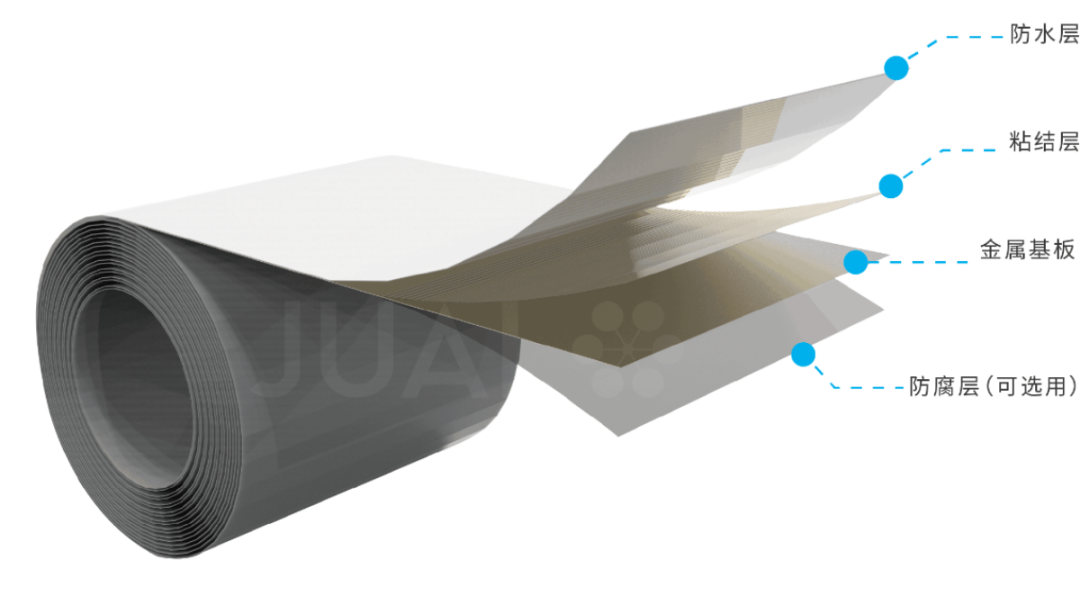
Nevertheless, in practical application, key attention must be paid to a critical question:Can composite materials processed by lamination technology effectively withstand natural temperature fluctuations over a 20-year building service life, and avoid various failure issues such as interlayer separation, misalignment, blistering, corrosion and brittle fracture?
Fundamentally, this requires in-depth analysis and research on whether the lamination process of two different materials can address the challenges brought by the difference in thermal expansion and contraction between dissimilar substrates.
Core Challenge — Interfacial Stress Accumulation Caused by Differential Thermal Expansion & Contraction
The essence of thermal expansion and contraction lies in the mismatch of Coefficient of Thermal Expansion (CTE) between different materials, which further generates thermal stress at the bonding interface.
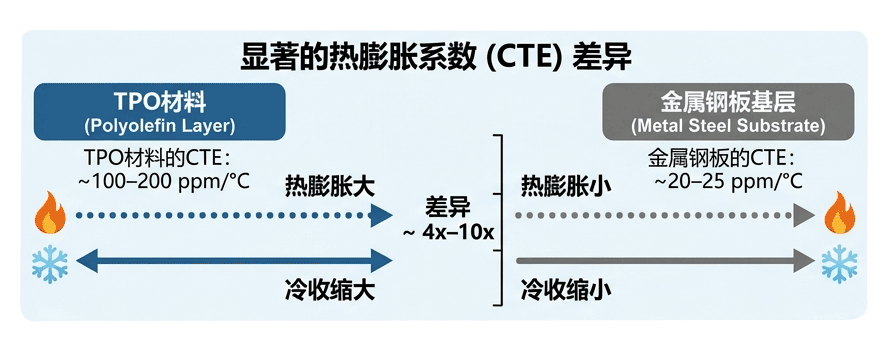
As indicated by the formula: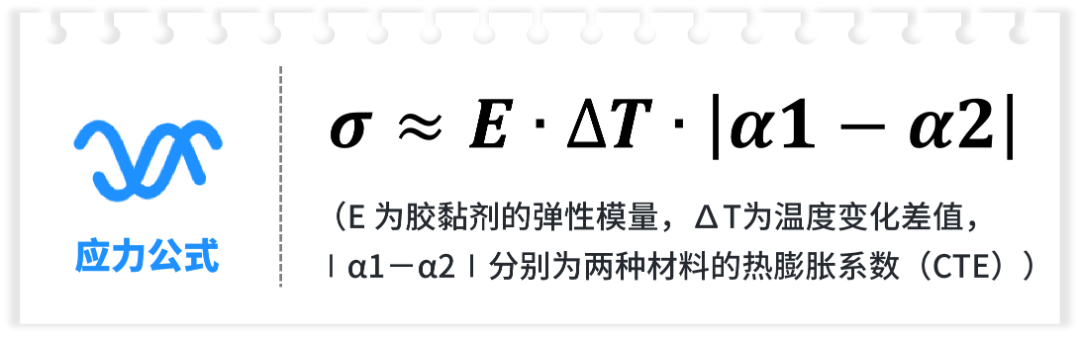
The larger the CTE difference between two materials and the wider the temperature variation range, the greater the thermal stress borne by the interface, and the higher the risk of material failure.
Hidden Risks — Continuous Thermal Stress Accumulation Induces Multiple Structural Failures
When interfacial thermal stress accumulates to a certain level, it will trigger a series of severe problems:
1. Once thermal stress exceeds the cohesive strength of the adhesive layer or the interfacial adhesion between adhesive and substrate, it will directly cause interlayer debonding (interfacial failure) or adhesive layer cracking (cohesive failure), damaging the integrity of the laminated panel.
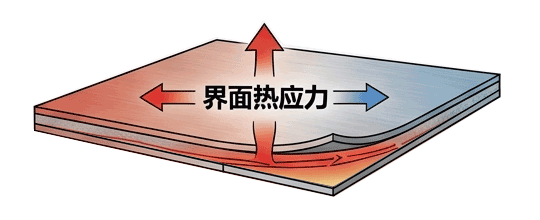
2. With every 50°C temperature fluctuation, the interfacial shear strength and tensile strength generally drop by 15%–30%, significantly reducing the structural stability of laminated panels.
3. Long-term temperature cycles lead to continuous accumulation of interfacial thermal stress and formation of fatigue stress, expanding micro-cracks in the adhesive layer and greatly shortening the service life of laminated panels.
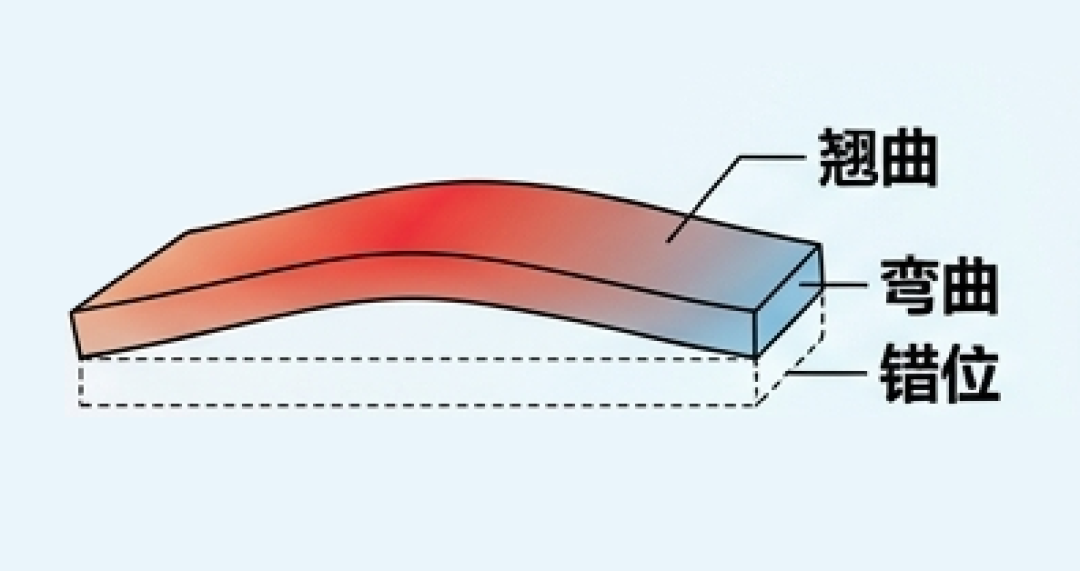
4. Expansion and contraction differences caused by temperature changes easily result in warpage, bending, misalignment and other deformation of laminated panels, undermining construction accuracy and application performance.
5. Micro-cracks and interfacial delamination of the adhesive layer form penetration channels, allowing moisture and corrosive media to infiltrate interlayers, triggering reduced insulation performance, electrochemical corrosion of metal substrates, and failure of waterproof sealing.
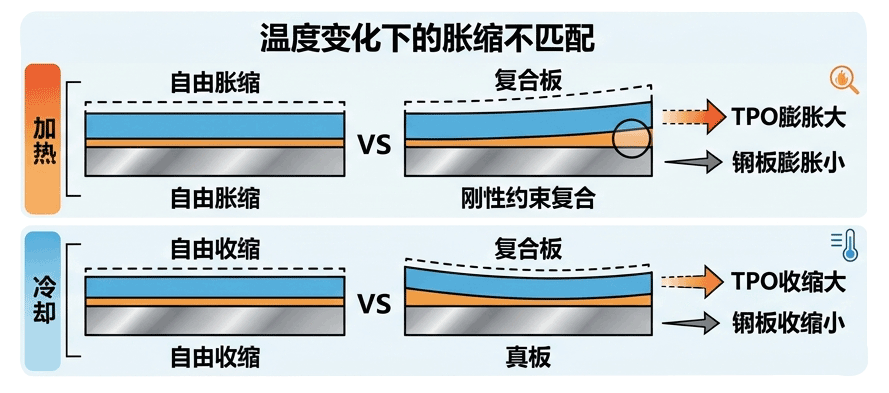
6. Under high-temperature conditions, adhesive outgassing, combined with material thermal expansion, may cause bulging and cracking of laminated panel encapsulation.
7. Under low-temperature conditions, the adhesive layer becomes brittle with drastically reduced toughness and impact/peeling resistance, prone to damage under slight external force.
Solution — JUAL Full-process Technical Control Against Thermal Expansion & Contraction Risks
Targeting the core pain points caused by temperature changes, relying on years of R&D and application experience from our European headquarters, JUAL has developed an exclusive integrated prevention and control system.
With refined craftsmanship and precise material selection, we fully guarantee the long-term reliability of CMC laminated panels, firmly fulfill the 20-year building service life commitment, and demonstrate JUAL’s technical strength and sense of responsibility in the composite building material industry.
01
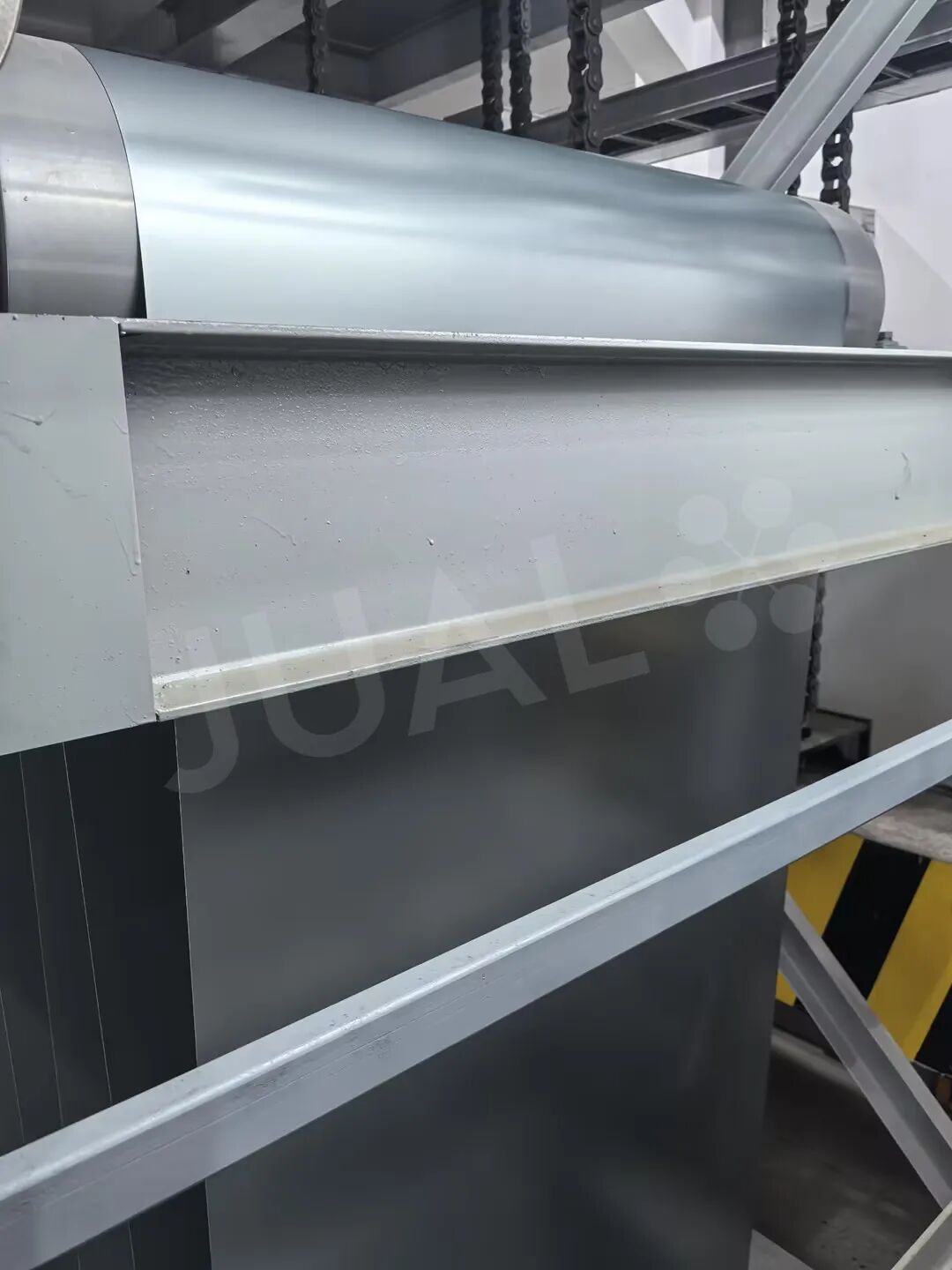
Differing from conventional simple treatment, we adopt customized physical activation on the surface of metal plates and TPO/PVC plates, precisely improving material surface energy through grinding, sandblasting, corona or plasma treatment.
Meanwhile, standardized full-process surface treatment is implemented for metal plates: degreasing, precision grinding, professional phosphating, passivation protection, and thorough air drying in sequence.
This fully activates the metal surface, fundamentally strengthening the adhesion between adhesive layer and substrate, greatly reducing the risk of interfacial failure, and building the first line of defense for the composite structure.
02
Abandoning general-purpose adhesives, we adopt exclusively matched low-modulus, high-elasticity adhesive (soft adhesive) with a stable elongation rate of 200%–500%.
It flexibly buffers thermal expansion/contraction stress and external vibration caused by drastic temperature changes, efficiently relieves interfacial thermal stress, avoids adhesive cracking and interlayer debonding fundamentally, and adapts to extreme temperature change working conditions — far exceeding ordinary industry standards.