JUAL

JUAL Think Tank | The Damage of Hail to Photovoltaic Power Stations
(JUAL Roofing Technology(苏州)有限公司,江苏苏州,215000)
摘 要:
关键词:
When we talk about the future of solar photovoltaic systems, we often get immersed in the conversion efficiency data of photovoltaic modules in the laboratory, yet overlook the most violent physical impact in nature - hail. Imagine, when hailstones with a diameter exceeding 1.75 inches (about 44 millimeters) come whistling down from a height of ten thousand meters at a speed of 128 kilometers per hour. This is no longer a gift from nature but a precise "kinetic energy bombing" of photovoltaic power stations.
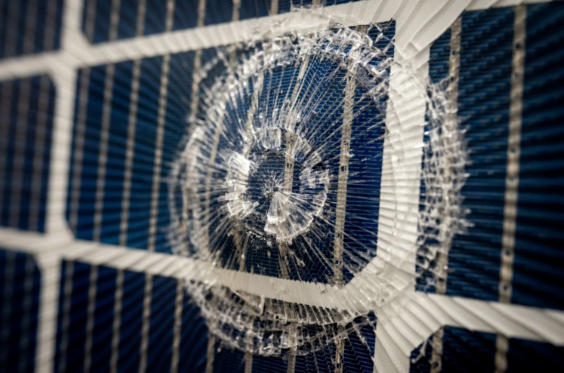
According to the European Severe Storms Laboratory (ESSL) database, in 2023, 9,627 hail events with a diameter were recorded, a sharp increase of 2,791 compared to the previous year. Among them, 1,931 were high - energy hailstones with , and even 92 giant hailstones with occurred. Many rooftop photovoltaic power stations were paralyzed under the impact of hail.
The damage of hail to photovoltaic power stations is essentially a process related to the dynamics of rigid - body collisions and the fracture mechanics of brittle materials. When hail, as a quasi - spherical projectile, falls, its destructive power is mainly determined by the kinetic energy at the moment of impact. At the same time, according to the terminal velocity formula in fluid mechanics, the terminal velocity is proportional to the square root of the hail diameter.
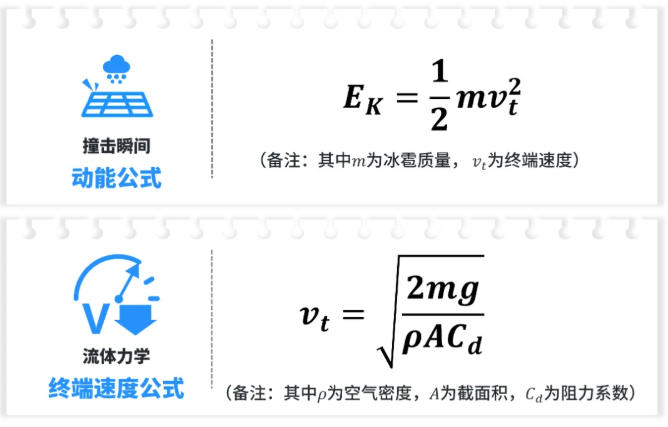
This means that when the hail diameter increases from 2cm to 5cm or 10cm as reported by ESSL, the mass of the hail increases in a cubic progression, resulting in an exponential leap in the impact kinetic energy. When this high - speed load acts on the surface of photovoltaic glass, if the local compressive stress generated exceeds the flexural strength of the glass (usually 90 - 120 MPa), breakage occurs. Even if the glass does not break, high - frequency vibrations can cause micro - cracks in the internal silicon wafers, which in turn will damage the lattice structure of crystalline silicon and increase the local series resistance . During long - term operation, these high - impedance regions will generate local overheating (hot - spot effect), eventually leading to diode breakdown or back - sheet ablation.
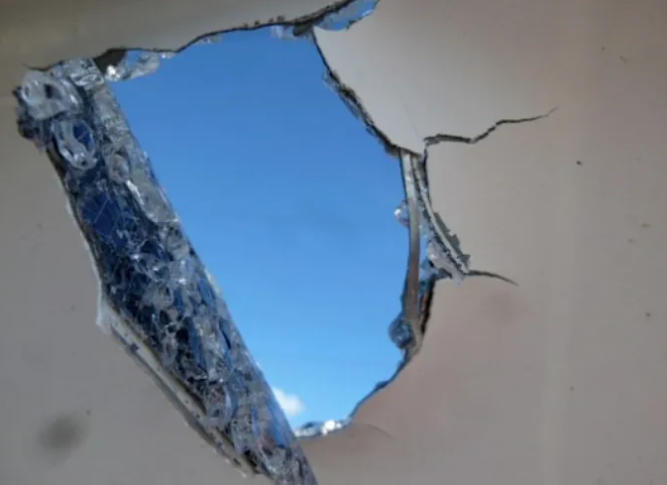
Simply relying on increasing the thickness of the glass or passively adjusting the installation inclination is just a stop - gap measure that treats the symptoms rather than the root cause and cannot completely eliminate the paralysis crisis of the photovoltaic system in extreme environments. To completely eliminate this hidden danger, our focus must be upgraded from isolated photovoltaic modules to the entire photovoltaic roof system. By the mechanical framework, deeply coupling the precisely designed buffer mounting brackets, high - strength flexible connectors, and highly reliable roof enclosure structures, the protection boundary is extended from the fragile edges of the components and firmly anchored to the entire roof system. Only by achieving this integrated system - level coordinated force - unloading can we truly prevent problems before they occur and fundamentally eliminate the system failure caused by extreme weather.
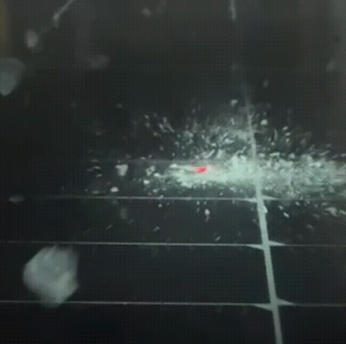
Take the JUAL PV - X solar photovoltaic system that has passed the stringent FM certification as an example. It not only requires the components to pass basic tests such as IEC 61215 but also achieves comprehensive defenses against wind uplift, fire, and hail through innovative fixing technologies and material selections. Under this "integrated photovoltaic and waterproof" design, the power station is no longer a combination of fragile glass plates but a highly integrated roof armor, ensuring that it remains as stable as a rock when facing the bombardment of extreme weather.