JUAL

JUAL Think Tank | The Significance of Mechanical Anchorage Connections for Single - ply Roofs - The Essential Differences between
(JUAL Roofing Technology(苏州)有限公司,江苏苏州,215000)
摘 要:
关键词:
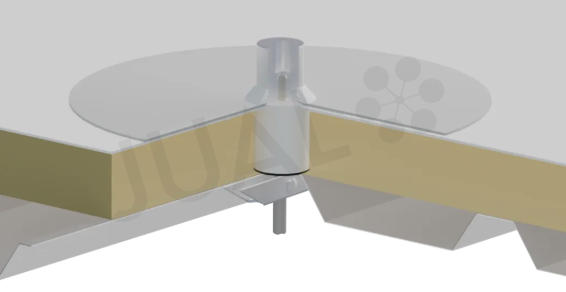
As a core technology to ensure the long - term safe operation of single - ply roof photovoltaic and equipment systems, the working principle of mechanical anchorage is to directly transfer the load to the building structure layer through mechanical connection methods, rather than relying on the load - bearing capacity of the surface materials of the roof. This "root - like" fixing method has significant technical advantages compared to the traditional "floating - like" fixing.
In many factory cases of installing photovoltaic systems on flexible roofs, there are still quite a few projects with misunderstandings in the selection of photovoltaic system connection methods, which directly affect the long - term reliability performance of the entire system. In this issue, we focus on the two most common technical route disputes in the market: flexible welded bases VS penetrative mechanical fixing bases, and conduct a thorough in - depth analysis.
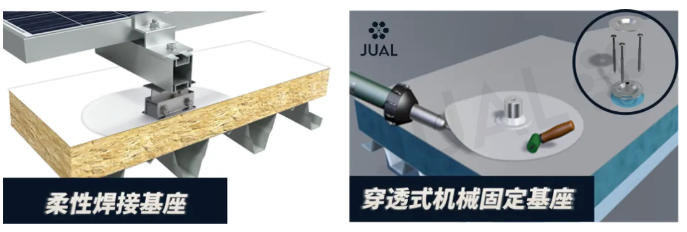
One is the flexible welded base that attempts to "parasitize" the base on the surface of the membrane through hot - air welding, and the other is the penetrative mechanical fixing base that insists on penetrating the waterproof layer and deeply rooting into the building's framework. This seemingly minor difference in the installation method actually creates an insurmountable gap in terms of material physics, structural mechanics, and the risk profile over the entire life cycle.
A. Analysis of Material Structure Stability
• Flexible Welded Base: Most of the flexible bases on the market are manufactured by injection - molding processes. From the perspective of materials science, injection - molded materials have insufficient rigidity in their microstructure compared to metal components. Under the long - term action of wind - vibration loads and day - night temperature differences on the roof, injection - molded parts are prone to creep and irreversible plastic deformation. This deformation will increase the connection gaps of the photovoltaic module installation system, affecting the overall fixing effect.
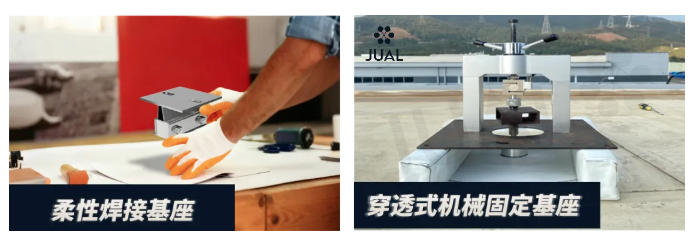
• Penetrative Mechanical Anchorage Base: The mechanical anchorage base is pre - fabricated from various materials of different properties, with each material undertaking corresponding functions to jointly achieve the two core functions of waterproofing and load - bearing. The base provides a reliable load - bearing design for the connection between additional functional equipment and the main roof structure through special anchors and support components. In addition, the pre - fabricated waterproof flange is processed from the same waterproof membrane as the roof, achieving a waterproof sealing effect with material compatibility.
B. Analysis of Dynamic Load Adaptability
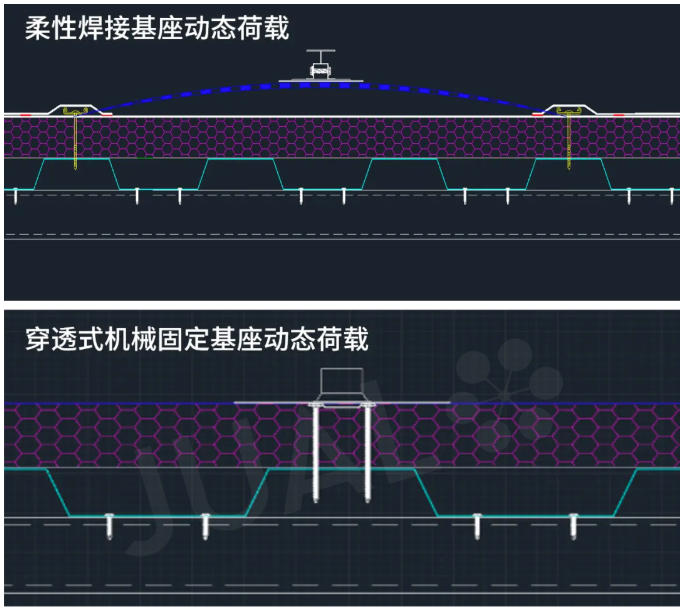
• The single - ply flexible roof is a dynamic working environment. For roof systems fixed with battens, the membrane will produce a fluctuation effect under the action of wind loads. Since the flexible welded base is fixed on the fluctuating membrane surface, under the long - term repeated pulling of wind suction, the welded part of the membrane is extremely prone to aging due to fatigue and becomes a breakthrough point for tearing. The penetrative base, by directly connecting to the building structure, can effectively avoid the instability factors of the intermediate medium and provide a more reliable load - transfer path.
C. Analysis of Explicit and Implicit Costs
• Although the initial investment of the penetrative mechanical fixing base may be slightly higher than that of the flexible base, once the flexible base fails, the repair often requires damaging a large area of the waterproof layer and even removing the photovoltaic array, resulting in extremely high repair costs. The designed service life of photovoltaic modules is usually 25 years. If the base system fails in the middle of operation, it will not only affect the power - generation revenue but may also lead to the interruption of the entire system's operation.
D. Analysis of Risk Case Warnings
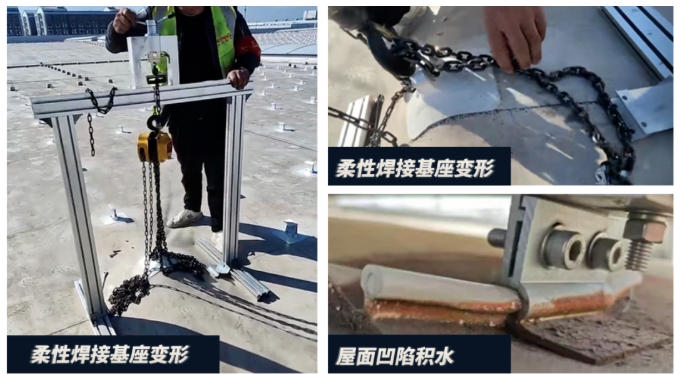
• In actual engineering cases, we have seen too many situations where the deformation of flexible bases has led to the loosening of component arrays; we have also seen the painful lessons of waterproof layer leakage within just a few years due to base subsidence and water accumulation. Choosing which base technology essentially means choosing different long - term risk - bearing methods. The flexible welded base, due to its characteristic of adhering to the "skin" rather than the "bone", is suitable for hard fully - adhered roof systems. The penetrative mechanical fixing base, with its comprehensive advantages in structural reliability, environmental adaptability, and economy, is more suitable for flexible membrane roof systems and has become an important direction for industry technology upgrading.
In conclusion, the real significance of mechanical anchorage lies not only in the "fixing" action but also in providing a safe, reliable, and durable connection and fixing state. Due to the instability of its injection - molded structure and excessive dependence on the installation base surface, the flexible welded base is difficult to be a qualified bearer of the "high - quality standard configuration" in the dynamic and variable single - ply roof environment. To achieve true long - term stability, it is necessary to return to the orthodox route of penetrative mechanical fixing.