JUAL


JUAL Think Tank | Lightning Strike Protection: Safeguarding the Safety of Industrial and Commercial Single - ply Roof Buildings
(JUAL Roofing Technology(苏州)有限公司,江苏苏州,215000)
摘 要:
关键词:
Lightning strikes, as an extreme natural phenomenon, the instantaneous release of its energy poses a severe challenge to modern buildings. Data from Underwriters Laboratories (UL) shows that lightning strikes cause direct property losses of over $1 billion annually in the United States, not including the indirect losses from business interruptions, data losses, and liability risks. For modern industrial and commercial single - ply roof buildings that integrate a large number of cutting - edge electronic devices, automated control systems, and precision instruments, an unprotected lightning strike can be catastrophic.
A. The Necessity of Installing a Lightning Protection System on the Roof
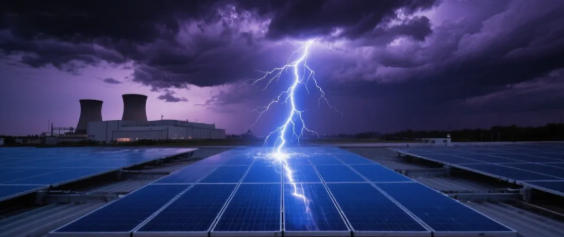
Industrial and commercial single - ply roof buildings usually have large roof areas, dense equipment, and high asset values. Facilities installed on the roof, such as photovoltaic power generation systems, ventilation equipment, and air - conditioning units, are located at the top of the building and directly exposed to high - risk positions during thunderstorms. Once struck by direct lightning, not only will these devices suffer structural and functional damage, but the lightning energy may also be introduced into the building through the connected electrical lines, resulting in damage to control systems, production equipment, and even stored items. Especially in production and storage environments involving flammable solids, liquids, or gases, the electric sparks or high temperatures caused by lightning strikes are more likely to cause fires or explosions.
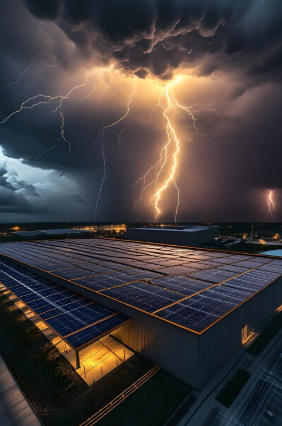
In modern industrial and commercial operations, the costs of downtime and equipment replacement can easily reach hundreds of thousands or even millions of yuan. Coupled with the cumbersome insurance claim procedures and the fact that insurance may not cover all losses, the concept of prevention first becomes even more important. In addition, for distributed energy sources such as rooftop photovoltaics, the lightning risk significantly increases. The investment cost of deploying a lightning protection system in advance is often lower, and the rate of return is higher.
B. The Core Working Principle of the Lightning Protection System
Installing a lightning protection system on a single - ply roof is to provide a low - impedance and controllable discharge path for lightning current when a lightning strike occurs, and quickly conduct the energy into the ground. The system usually consists of a lightning receptor, down conductors, and a grounding device. The lightning receptor is installed at a high point on the roof to intercept the lightning energy first; the down conductors safely conduct the current from the roof to the ground; and the grounding device decomposes the instantaneous large current into a wider soil area through diffusion and shunting, reducing the local potential and minimizing the hazards caused by back - strikes or step voltages.
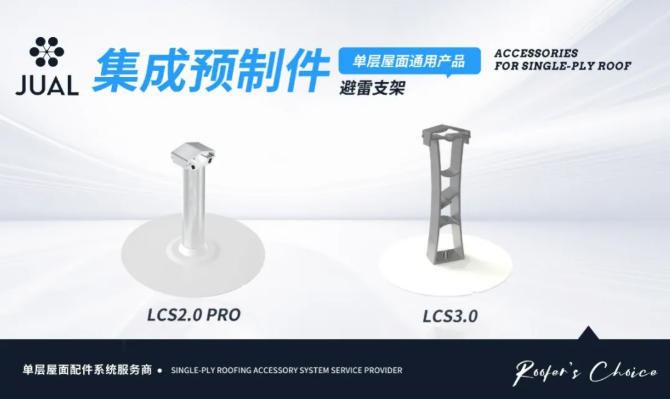
JUAL, as a world - leading single - ply roof accessory system service provider, and also an innovative leader and deep - cultivator of integrated pre - fabricated component solutions, accurately understands market demands. In response to the lightning protection challenges of single - ply flexible roofs, JUAL has launched the JUAL Lightning Protection Bracket series to safeguard building safety with cutting - edge technology.
√ Lightning Protection Solution
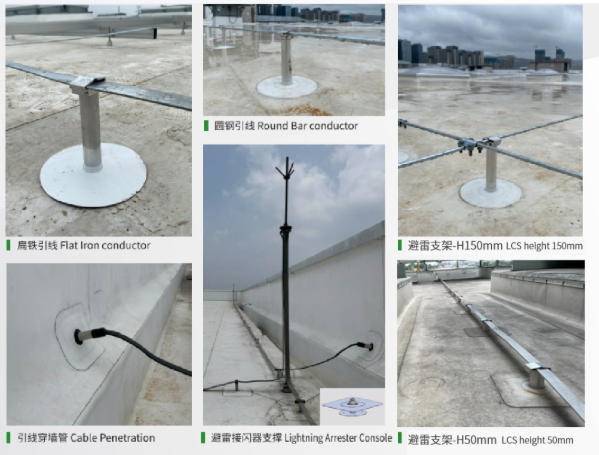
By setting up lightning - conducting leads on a single - ply roof, the lightning is intercepted and transmitted through the lightning - conducting leads, and finally introduced into the grounding system. This avoids the release of lightning energy outside the building, in the structure, or in functional devices. The entire lightning protection system usually consists of a lightning rod receptor, lightning - conducting leads, lightning protection brackets, connection clamps, and lead - through - wall pipes.
√ Waterproof Reliability
The lightning protection brackets are integrally sealed and connected to avoid the risk of water ingress and improve overall stability. The single - ply roof waterproof membrane is installed without damage, ensuring safe and efficient waterproof performance.
√ Prefabricated Standard Construction Technology
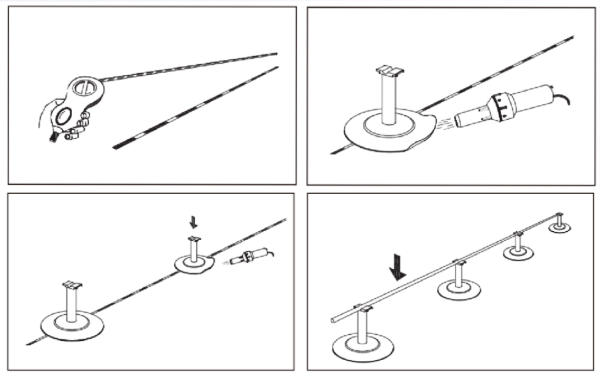
In the design and construction, spacing control is a key link that complies with safety standards. The product is developed in accordance with GB50057 - 2010 "Code for Design of Lightning Protection of Buildings". During installation, ensure that the orientation of the brackets, the lightning - conducting leads at the top, and the laid lines are all kept parallel.
√ Safety and Durability
The design of the lightning protection brackets takes into account environmental corrosion factors and the impact of mutual corrosion between different materials on product durability. Based on an in - depth analysis of the needs of various application scenarios, an innovative combination design of "rigid - flexible combination, insulation protection" has been introduced, aiming to fully meet the strict requirements of long - term use and durability of lightning protection brackets in complex environments.
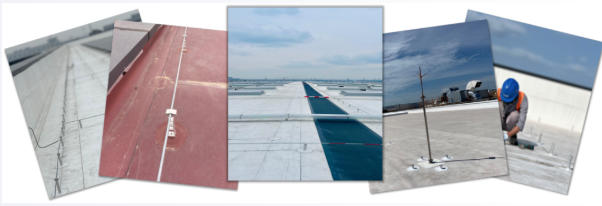
For single - ply flexible roofs, the lightning protection system is an "integrated item" that must be deeply integrated in the design stage. Scientific design, meticulous construction, and continuous maintenance form a closed - loop protection system. Only by establishing a management mindset of "starting with the end in mind and giving priority to quality assurance" in advance can the building be ensured to stably resist lightning risks throughout its service life, creating a safe and reliable external environment for production and operation.