JUAL

JUAL Think Tank | Igniting a New Revolution in the Trillion - level Single - ply Roof Renovation Market
(JUAL Roofing Technology(苏州)有限公司,江苏苏州,215000)
摘 要:
关键词:
Today, with the stock of existing buildings in China exceeding 60 billion square meters and nearly 1 billion square meters of roofs entering the "renovation period" each year, a problem that has long plagued property owners is becoming increasingly prominent: how to make aging roofs not only "leak - free" but also fulfill the value missions of the new era, such as hosting photovoltaic power generation and ensuring safety protection?
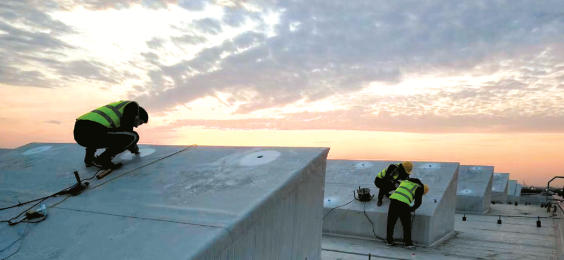
As traditional renovation solutions face bottlenecks in efficiency, potential quality issues, and continuous disruptions to building operations, a "smart manufacturing" revolution originating from the details of the roof is quietly unfolding. This is the single - ply roof renovation solution centered around "integrated pre - fabricated components", which is upgrading the "hand - crafted workshop - style" operation mode of traditional construction sites to an "industrialized paradigm" of factory pre - fabrication and on - site assembly, bringing unprecedented room for imagination to the vast stock building market.
"What we are facing is a huge yet extremely thorny market," said a senior building asset manager. "On one hand, the roof aging problems of industrial plants and large - scale public buildings are breaking out intensively. On the other hand, the implementation of the national mandatory code GB 55030 - 2022 'General Code for Waterproofing of Building and Municipal Engineering' has set unprecedentedly high standards for waterproofing projects. Under the dual pressure, the traditional 'patch - where - it - leaks' model is no longer sustainable."
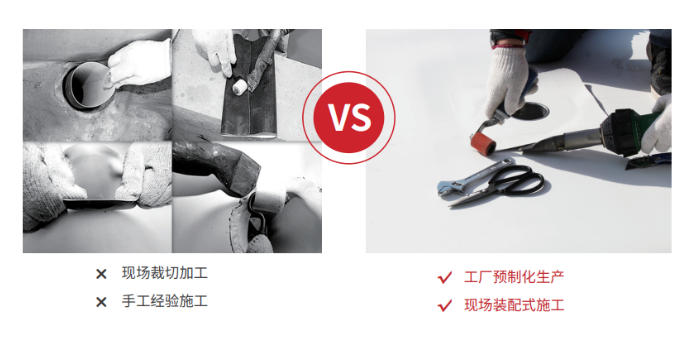
Traditional renovation solutions are full of uncertainties. Take the most common industrial plants as an example. What property owners worry most about is that the renovation project will affect the normal production inside. Processes such as on - site cutting, welding, and applying sealant not only generate a large amount of dust and noise, but also the construction progress is heavily dependent on the weather and the "craftsmanship" of construction workers. A seemingly simple roof node treatment may, due to problems such as sealant aging and poor welding, become a leakage point again a few years later, causing greater economic losses.
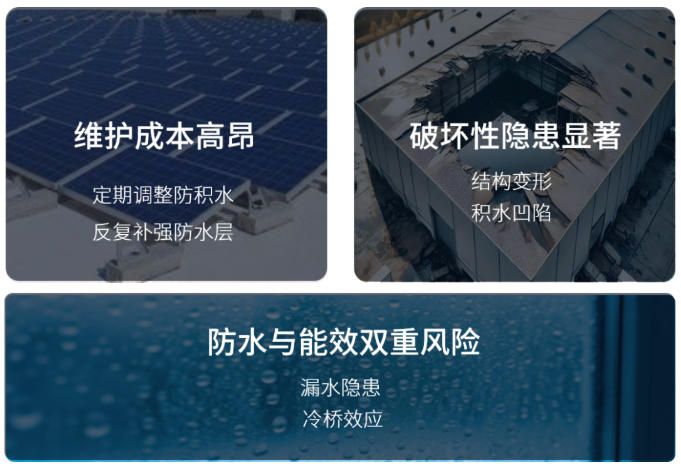
An even more severe challenge comes from the upgrading requirements of building functions. When enterprises plan to install a distributed photovoltaic system on the roof to respond to the "dual - carbon" goal, they find that the traditional roof "can't bear the load". The photovoltaic brackets fixed with counterweights will compress the insulation layer, form ponding depressions, and continuously pull the waterproof membrane over the long term, greatly shortening the roof's lifespan. If the method of directly penetrating the roof is used for fixation, the waterproof treatment is extremely complex, and it is very likely to create new leakage risks and the "cold - bridge effect", which is not worth the effort.
These pain points are precisely the "tipping points" for new technologies. The market calls for a safer, more efficient, and more reliable solution that must simultaneously meet three core demands: excellent engineering quality, zero disruption to building operations, and perfect compatibility with future functions.
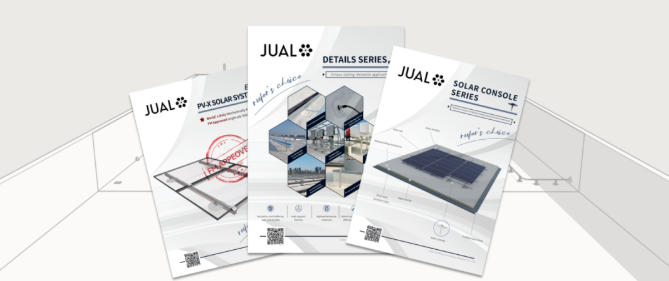
Against this backdrop, "integrated pre - fabricated components" have emerged. It is not just a simple material upgrade but a complete conceptual innovation. The "waterproof layer" and "structural load - bearing components" that used to be manually assembled on - site by workers are pre - fabricated into a complete and standard component in the factory through precise processes. JUAL uses the high - temperature melting and compounding technology of polymer materials to achieve molecular - level integration of waterproof membranes and functional accessories of the same material. When the product leaves the factory, it has both the properties of structural load - bearing and being leak - free.
This transformation brings disruptive advantages:
● Quality Certainty:
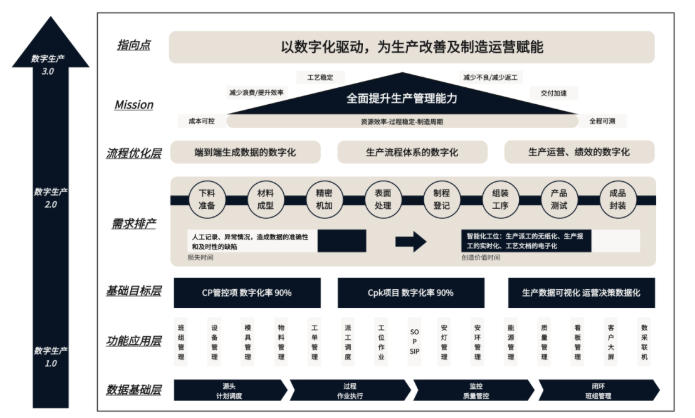
The standardized production environment and strict quality control system in the factory completely replace the "empiricism" of on - site construction. The dimensions, performance, and waterproof effect of each pre - fabricated component are highly consistent, eliminating potential safety hazards caused by human errors from the source.
● Doubled Efficiency:
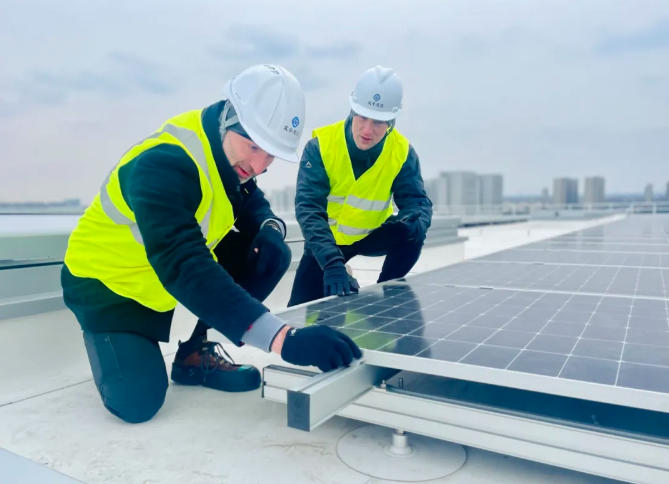
Construction has been simplified from complex "multi - process operations" to standardized "assembly - type splicing". Taking the measured data of a project in Lingang, Shanghai as an example, after adopting the integrated pre - fabricated component solution, the overall construction efficiency has increased by about 40%, and the on - site labor cost has decreased by 10%. This means a shorter construction period, less weather impact, and faster project delivery.
● Minimal Construction Disruption:
Since all core components are assembled on the roof, the need for construction inside the building is completely avoided. This has inestimable commercial value for factories, data centers, or commercial complexes that need to operate 24 hours a day without interruption.
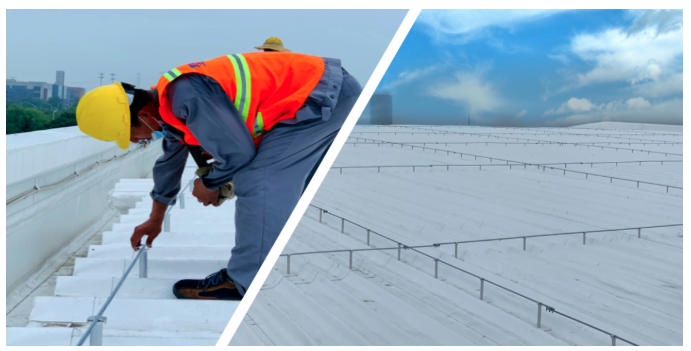
In a project in Lingang, Shanghai, which is only 5.7 kilometers away from the coastline, the power of integrated pre - fabricated components has been fully verified. The building roof has long been affected by salt spray corrosion and strong winds. The original lightning protection and protection facilities have corroded and failed, and there are also leakage problems. At the same time, the property owner has new photovoltaic construction requirements.
★ Photovoltaic System Renovation: In response to the new photovoltaic demand, the plan abandoned the high - risk counterweight block mode. The "flipping anchor photovoltaic base" was adopted. This pre - fabricated component integrates the anchoring structure and the waterproof skirt. Its anchoring end is firmly connected to the purlin of the building main body, providing strong wind - uplift resistance. Its waterproof skirt is integrated with the main roof waterproof layer through hot - air welding, achieving the ideal effect of "structure is waterproof". Coupled with a lightweight and high - strength aluminum alloy double - rail bracket, the entire photovoltaic system is stable, durable, and places zero burden on the roof.
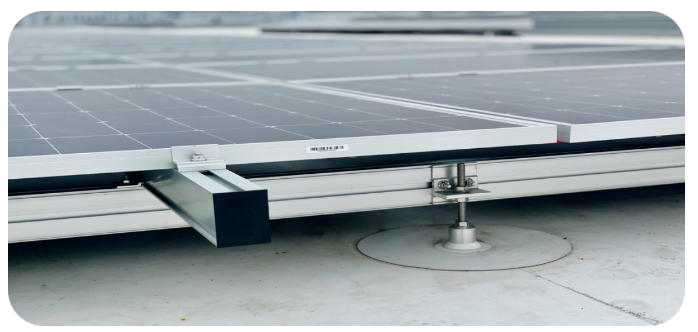
★ Safety Protection Upgrade: The original stainless - steel guardrail was complex to construct and left leakage and cold - bridge risks due to penetrating the roof. The new plan uses the "pre - fabricated safety guardrail system". Its anchoring base also integrates waterproof and heat - bridge - breaking functions and can be installed with construction only on one side of the roof. The aluminum alloy profiles pre - fabricated in the factory have high precision and corrosion resistance and only need simple assembly on - site. More importantly, a fully enclosed enclosure, self - closing doors, and eye - catching signs are systematically designed, upgrading the safety protection level to a new height.
★ Lightning Protection System Reconstruction: In response to the problem of corrosion and breakage of the original galvanized flat - iron brackets, the new plan uses pre - fabricated lightning protection brackets made of aluminum alloy. Its lightweight and corrosion - resistant characteristics perfectly adapt to the marine climate. The innovative "Clink buckle" design makes the installation of lightning - conducting leads as simple and quick as building blocks, achieving standardized and efficient operations of "one positioning, two fixings, and three buckles".
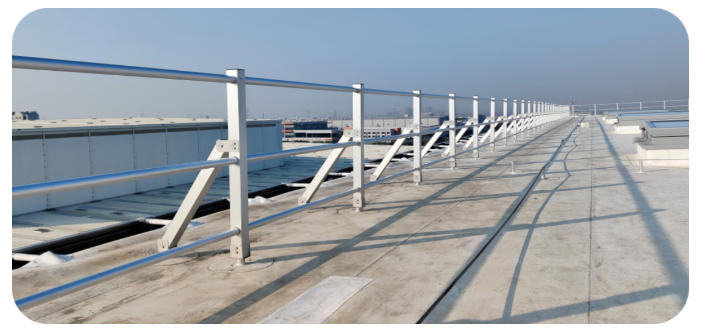
This case proves that the integrated pre - fabricated component technology is not just the victory of a single product but also the victory of a systematic solution. It transforms roof renovation from a passive "surgical operation" full of compromises into an active "asset upgrade" with an eye on the future.
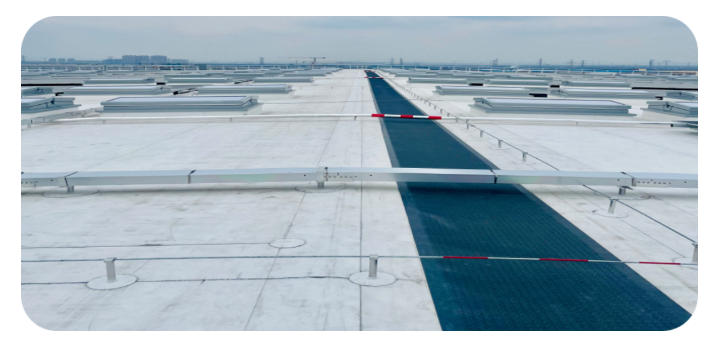
As China's economy enters a stage of high - quality development, the concept of "good houses" is extending from new buildings to the renovation and maintenance of existing buildings. The single - ply roof renovation market is standing at the crossroads of an industry upgrade driven by technology.
JUAL has solved isolated product problems with a systematic mindset and enhanced the life - cycle value of buildings with an attitude of being responsible for the future. Undoubtedly, it has laid the first cornerstone in this transformation that is enough to stir up a huge wave, indicating that an era of "smart manufacturing" for building renovation has arrived!