JUAL

JUAL Think Tank | Invisible Risks on the Roof: The Fire in Changzhou Factory Rings the Alarm, and Certified Fire - resistant PV Systems Are Urgently Needed
(JUAL Roofing Technology(苏州)有限公司,江苏苏州,215000)
摘 要:
关键词:
Recently, a huge fire that broke out on the roof of the Honeycomb Energy factory in Changzhou, Jiangsu Province, has sounded the alarm for industrial and commercial owners around the world. On the afternoon of July 21, although the fire caused by the rooftop photovoltaic panels did not result in any casualties, it exposed a crucial yet often overlooked loophole: the inherent fire risks of rooftop photovoltaic systems and the potentially catastrophic consequences once they get out of control.
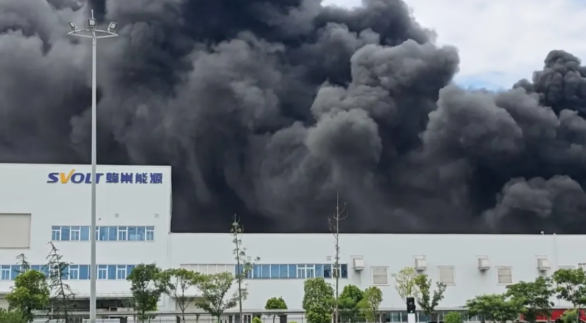
These projects are highly praised for their clean energy attributes and the advantage of reducing operating costs. However, in some cases, the rapid expansion of their application has outpaced the rigorous engineering and specification standards necessary to ensure long - term safety and asset protection.
The frequent occurrence of photovoltaic system fires around the world has pushed the issue of industry safety to the forefront. Besides the need to establish a forward - looking fire prevention system, scientific and effective fire control mechanisms and loss - minimization strategies are also of irreplaceable importance. Against the backdrop of the rapid expansion of the photovoltaic market, traditional photovoltaic solutions, in pursuit of short - term cost advantages and construction efficiency, often overlook the systematic synergy among photovoltaic modules, the support system, and the roof waterproof layer.
This defect in system integration not only weakens the structural stability of buildings but also leads to a fatal loophole in fire safety. A local thermal runaway event that could have been risk - controlled through proper design ultimately escalates into a large - scale fire that is difficult to contain, resulting in significant property losses and a crisis of industry trust.
These experiences and lessons highlight the value of technological development and upgrading, the standardization of industry standards, and authoritative certification. The focus of fire safety should not merely be on the photovoltaic materials themselves; the support system that firmly fixes these components to the building is equally important. A poorly designed or tested support system may fail under stress such as fire or extreme weather, compromising the integrity of the roof and thus exacerbating the spread of the fire.
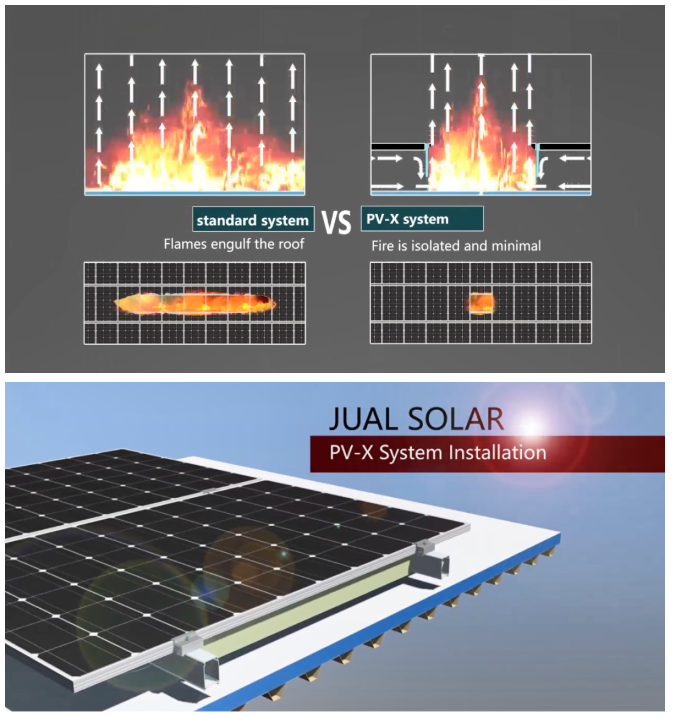
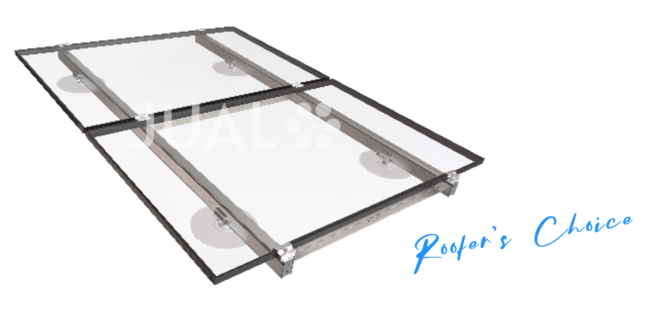
Based on the concept of integrated roofing and photovoltaic systemization, the JUAL PV - X photovoltaic system provides a new solution for industry safety and reliability. It constructs a triple - protection system of waterproof durability, two - way load support, and application safety through a rigorous engineering verification system. This innovative system effectively reduces the speed of fire spread, secures a critical time window for fire rescue, and truly achieves a qualitative change "from the fire source passage to a safety barrier."
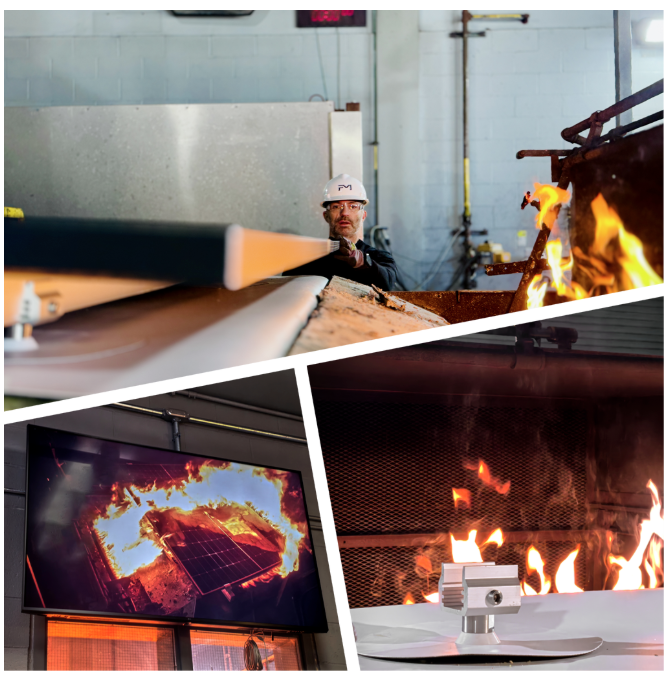
When we talk about excellent fire - resistant performance, the globally recognized gold standard is FM Approved. For a photovoltaic system to obtain this certification, it must pass extremely stringent fire tests, mainly evaluating the following aspects:
★ Fire Spread on Flat Roofs: Under intense fire exposure, measure the speed and extent of fire spread within the system. A system that passes the FM certification can effectively confine the fire to a very small area, preventing the fire from "jumping" among the module arrays and engulfing the entire roof.
★ Combustibility: Ensure that the system components themselves do not significantly increase the fire hazard or produce splashing molten materials when burning, which could trigger secondary fires.
★ System Integrity: The certification will verify that every component, from the fixing anchors to the module clamps, can maintain its structural integrity during a fire, preventing the system from collapsing and causing more serious damage.
Fire resistance is of utmost importance, but the FM certification assessment is comprehensive. The JUAL PV - X photovoltaic system is designed to meet these stringent standards, and its performance also encompasses excellent wind uplift resistance, hail impact resistance, and waterproof performance. This ensures that the rooftop photovoltaic system can not only withstand fire but also cope with various extreme weather conditions, achieving comprehensive and long - term protection of building assets.
The deployment of rooftop photovoltaic systems is a strategic decision that concerns long - term benefits and safety responsibilities. The frequent fire accidents recently have sounded the alarm for the industry, which will surely catalyze the iterative upgrade of safety standards and in - depth breakthroughs in technological innovation. It will promote the transformation of the value evaluation system from a short - term perspective of the levelized cost of electricity (LCOE) and initial investment (CAPEX) to a sustainable dimension of full - life - cycle safety resilience and total cost of ownership (TCO).